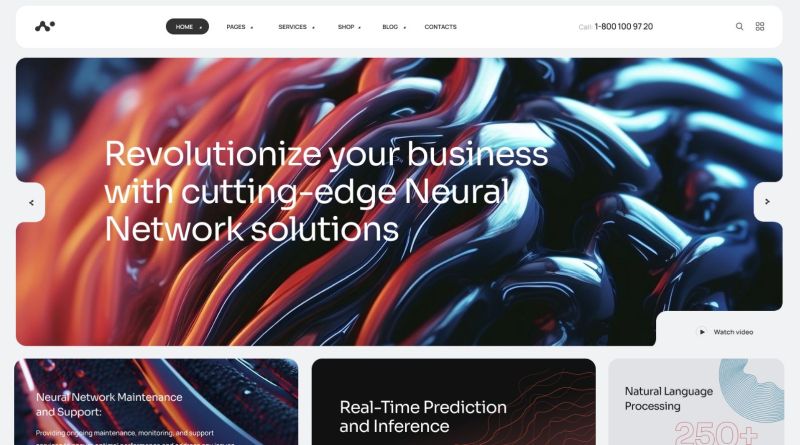
I recently had the opportunity to explore Neuros, a theme positioned as an AI-powered solution for a diverse range of online presences. After using it, I saw a theme designed with modern needs in mind, particularly focusing on versatility and incorporating artificial intelligence capabilities.
As someone interested in how technology is shaping web design, the promise of an “AI-powered” theme was immediately intriguing. Neuros aims to cater to agencies, startups, portfolios, and any business or individual looking to establish a strong online presence and leverage technology to stand out. It combines a sleek design with cutting-edge AI integrations and robust customization options.
All of this is presented through what sounds like a very user-friendly drag-and-drop interface, built around Elementor, a page builder I’m quite familiar with. Whether the goal is a large corporate site, a creative showcase, or a conversion-focused marketing funnel, Neuros is equipped to handle it. Let’s delve deeper into what this theme offers based on my findings.
Key Features
When exploring Neuros, several key features stood out to me, painting a picture of a powerful and flexible theme. The first point highlighted is its inherent versatility. This theme isn’t targeted at one specific niche. Its universal design means it transcends industry boundaries. I can see how this would be beneficial for a wide array of users. For example, photographers, designers, and artists will appreciate the sleek portfolio layouts offered. Meanwhile, marketing agencies and consultants can utilize powerful agency demos designed to convey expertise and innovation. The theme is also presented as being scalable enough for various sectors, from finance and healthcare to the rapidly evolving AI startups and tech ventures.
Perhaps the most distinctive feature, and the one that truly sets Neuros apart, is its AI-driven customization. This is where the “AI-powered” aspect comes into play. The theme reportedly uses smart content modules operating behind the scenes. These modules don’t just offer static options; they adapt to your inputs. This adaptive capability means the AI assists in the design process by suggesting layouts, color schemes, and typography combinations. These suggestions are intended to align with your specific brand’s identity. The implication here is significant: this AI-assisted design capability is said to reduce setup time. For non-designers, it offers a powerful helping hand, enabling them to create websites that look polished and professional without needing advanced design skills or a deep understanding of design principles. The idea of a theme actively assisting in the creative process is quite advanced and seems like a major time-saver.
At its core, Neuros is built upon Elementor page builder. This is a crucial point, as Elementor is widely known as a leading live page builder in the WordPress ecosystem. The fact that Neuros is fully compatible means users can enjoy the intuitive drag-and-drop simplicity that Elementor provides. Crafting various pages like homepages, landing pages, and custom templates becomes a visual process. You can simply drag elements onto the page and arrange them as needed. It has a library of pre-built sections that users can utilize, including elements like hero banners, feature grids, and testimonial sliders. The ability to assemble pages in minutes, not days, using these pre-built components combined with Elementor’s ease of use, speaks directly to improving workflow efficiency. For anyone already comfortable with Elementor, the transition to using Neuros should be seamless. For those new to it, it represents an accessible way to build complex layouts.
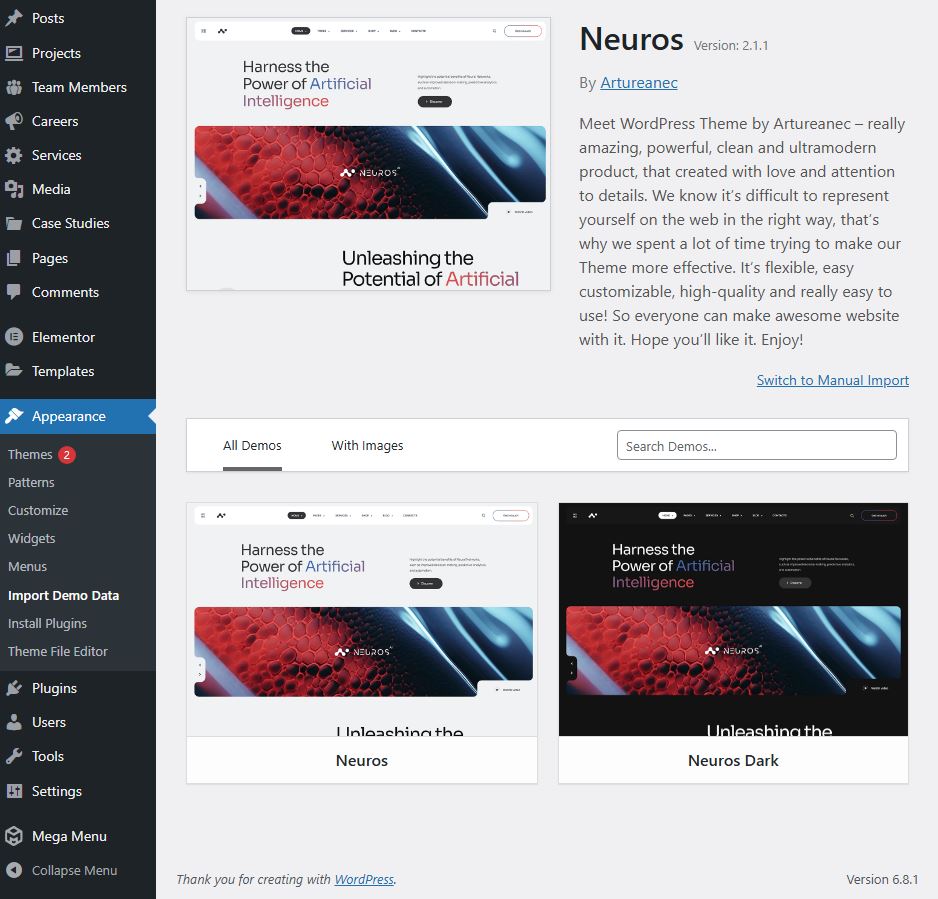
The process of getting started with Neuros also seems streamlined thanks to its one-click demo import. I must indicate that Neuros offers nine specialized homepage styles. These aren’t just generic layouts; they include styles tailored for specific concepts like AI agencies, neural networks, chatbots, image generators, voice generators, and general AI solutions. The significant advantage here is the ability to import a complete demo site with just a single click. This provides a fully structured starting point. Once the demo is imported, the user simply replaces the demo content – text, images, branding – with their own. This one-click import feature is streamlining the setup process and removing technical hurdles that might otherwise slow down website creation. It allows users to visualize their site quickly and then focus on content rather than structure.
For those looking to engage in e-commerce, Neuros is WooCommerce-ready. This isn’t just basic compatibility; it extends to providing essential e-commerce components such as product listing templates, dedicated cart and checkout pages, and a customizable shop builder. The integration goes further by incorporating Ajax-powered carts and Ajax pagination. These features contribute to delivering a seamless shopping experience for site visitors. This readiness for e-commerce means that whether you’re planning to sell digital products, AI services, consulting packages, or physical goods, Neuros provides the necessary framework within the theme itself, reducing the need for additional complex setup.
In terms of fundamental website requirements, Neuros appears robust. It is 100% responsive and retina-ready. This ensures that the website will render perfectly on any device, regardless of screen size or resolution, providing a “pixel-perfect” display everywhere. In today’s multi-device world, responsiveness is non-negotiable, and the retina-ready aspect ensures sharp visuals on high-resolution screens. Beyond device compatibility, Neuros also supports RTL (Right-to-Left) languages and is translation-ready. With compatibility for PO/MO files and WPML (WordPress Multilingual Plugin), it makes global expansion effortless for businesses or individuals targeting international audiences. The ease of creating a multilingual site is a valuable asset for reaching a broader market.
The level of control over design customization is highlighted as unlimited customization. It has unlimited color options and compatibility with over 650 Google fonts, along with custom typography controls. This gives users significant design freedom to align the site’s appearance perfectly with their brand identity. The theme includes a built-in theme options panel powered by Redux, a well-known framework. This panel allows users to tweak various parts of the site, such as headers, footers, sidebars, and page headings, without needing to write code. For users who want to make more advanced modifications or developers who need a safe environment for modifications, Neuros includes a child theme. Child themes are standard practice for making modifications without losing changes when the parent theme updates. Additionally, the inclusion of Figma files for designers is a thoughtful touch, allowing design mockups and assets to be used or modified in a professional design tool before implementation.
Performance and SEO are also addressed. The product is built for speed, with its code handcrafted in HTML5 and CSS3. It utilizes Ajax loading for dynamic content, which can improve perceived performance by loading parts of the page without a full refresh. Performance enhancements are trimming page load times. On the SEO front, the theme reportedly follows SEO best practices right out of the box. This inherent SEO friendliness helps content get indexed and rank quickly in search engine results, which is vital for online visibility.
Finally, Neuros incorporates conversion-focused features. These are tools designed to help users achieve specific goals, such as lead generation, subscriptions, or sales. The theme packs in various tools like newsletter popups and support for popular form plugins such as Mailchimp and WP Forms. Countdown timers can be used for promotions, creating urgency. Scroll-triggered animations are included to guide user attention down the page. Social sharing widgets are built directly into posts and portfolio items, making it easy for visitors to share content. Collectively, these features are working together to boost engagement, increase subscriptions, and drive sales, indicating that the theme isn’t just about aesthetics but also about achieving measurable business outcomes.
I must also touch upon the provision of pre-built pages and custom post types. Beyond the homepage demos, Neuros includes over 25 pre-built page templates covering common needs like About Us, Team members, Services, Careers, FAQ, and pricing plans. This extensive library of pre-designed inner pages saves significant time in setting up standard website sections. Custom post types are included for projects, testimonials, and galleries. This ensures that specific types of content are organized logically and can be styled consistently across the site, providing a professional and structured presentation.
Looking at this comprehensive list of features, it’s clear that Neuros aims to be a complete solution, covering design, functionality, e-commerce, performance, and conversion, all while adding the unique element of AI assistance.
User Experience
The user experience with Neuros seems to prioritize ease of use and efficiency, catering to a range of users from novices to more experienced designers and developers. The foundation of the user experience is the integration with Elementor. The emphasis on “true drag and drop simplicity” suggests that building pages is highly intuitive and visual. I can imagine selecting elements from a library, dragging them onto the canvas, and arranging them directly, which is a very accessible way to design without needing to touch code. This visual approach means you see the changes as you make them, providing immediate feedback and reducing the guesswork involved in traditional web design.
The one-click demo import feature plays a significant role in the initial user experience. The idea that I can import a fully structured, pre-designed website with a single click is a major time-saver. Instead of building from scratch or following complex setup instructions, I get a complete framework instantly. This allows me to see the theme’s capabilities in action and then focus my efforts on replacing the demo content with my own. This process streamlines setup and removes technical hurdles, which directly enhances the initial user experience, making it less daunting, especially for those new to WordPress or complex themes.
The AI-driven customization feature seems poised to significantly impact the user experience, particularly for non-designers or those looking for creative inspiration. The smart content modules that adapt to input and suggest design elements like layouts, colors, and typography sound incredibly helpful. Rather than staring at a blank page or struggling with design decisions, the AI acts as a co-pilot, offering suggestions that align with the brand identity. This assistance is highlighted as reducing setup time, which is a direct improvement in the user’s workflow efficiency. It democratizes the design process to some extent, allowing users without professional design backgrounds to achieve polished results.
Furthermore, the unlimited customization options, managed through the built-in theme options panel powered by Redux, contribute to a flexible user experience. The ability to tweak various aspects of the site’s appearance – headers, footers, sidebars, headings – without needing to code makes fine-tuning the site straightforward. This level of control, accessible through a user-friendly panel, means users can achieve a highly customized look and feel directly within the WordPress dashboard. For those who require more control or are developers, the provision of a child theme offers a safe way to implement deeper customizations without risking loss during updates. The inclusion of Figma files also benefits the design workflow for professional designers working with the theme.
The overall feeling conveyed by the descriptions is one of an intuitive interface. The combination of Elementor’s visual builder, the ease of demo import, the helpful AI suggestions, and a well-organized theme options panel suggests that navigating and using Neuros to build and customize a website should be a relatively smooth and positive experience. The focus on reducing setup time and removing technical hurdles points towards a theme that aims to be accessible and efficient, allowing users to focus more on content and achieving their goals rather than struggling with the underlying technology. The comprehensive nature of the pre-built pages and custom post types also contributes to this positive experience by providing ready-made structures for common content, ensuring consistency, and saving the user from having to create these from scratch.
In essence, the user experience seems designed to empower users of varying technical skill levels to build professional, sophisticated websites relatively quickly and with less friction than might be expected from such a feature-rich theme. The AI adds a layer of assistance that could be particularly valuable in simplifying design decisions.
Support and Documentation
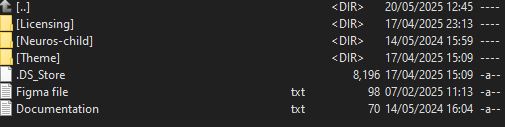
Neuros includes a child theme for safe customizations. A child theme is a standard and recommended practice in WordPress development. It allows users to modify the theme’s files without directly altering the core theme files. This is crucial because if you modify the main theme files and then update the theme, all your changes will be lost. By using a child theme, your customizations are kept separate and are preserved when the parent theme (Neuros) is updated. While not traditional documentation or direct support channels, including a child theme is a form of support for developers and users who want to make code-level changes, enabling them to do so safely and maintainably. It implies that the theme is built with best practices in mind for extensibility.
It has Figma files for designers. Figma is a popular interface design tool. Providing the theme’s design assets or templates in Figma format can be incredibly useful for designers who are working with the theme. It allows them to visualize layouts, understand the design system, or even create custom section designs in their preferred tool before implementing them in WordPress using Elementor. Like the child theme, this isn’t a traditional support channel like email or forums, nor is it explicit documentation on how to use the theme step-by-step for a beginner. However, for a design agency or a professional designer using Neuros, these Figma files represent a valuable asset that supports their workflow.
Pricing
The theme is a commercial product and is available for purchase through a marketplace. The cost of it may vary based on the terms and deals of the author/marketplace.
Use Cases
One of the aspects I find particularly interesting about Neuros is its intended versatility and the wide array of use cases it is designed for. The theme is presented as a genuinely multipurpose tool, aiming to serve many different types of websites and online ventures.
The primary audience includes agencies, startups, portfolios, and any modern business that wants to harness the power of artificial intelligence to stand out online. This broad categorization immediately tells me that the theme isn’t restricted to a single niche but is built with adaptability in mind.
Breaking this down further, photographers, designers, and artists are users who would appreciate the theme, particularly its sleek portfolio layouts..
Marketing agencies and consultants are another key target group. The theme offers powerful agency demos, specifically designed to convey expertise and innovation. For businesses that sell services and expertise, having a website that looks professional, trustworthy, and forward-thinking is essential. The agency demos likely provide structured layouts for presenting services, case studies, team members, and contact information compellingly.
Beyond these creative and service-based businesses, Neuros is also positioned for more traditional sectors like finance and healthcare, as well as tech-focused areas like AI startups and tech ventures. The fact that it scales effortlessly means it can handle the complexity and scale required for enterprise sites and high-traffic blogs. This indicates a robust underlying structure capable of managing significant amounts of content and visitor traffic.
The WooCommerce integration opens up further use cases specifically related to e-commerce. Neuros is suitable for users who want to sell digital products, AI services, or consulting packages directly through their website. The full suite of WooCommerce features, including product listings, cart, checkout, and a customizable shop builder, means the theme can function as a complete online store for various types of products and services. The inclusion of Ajax features for a seamless shopping experience enhances its suitability for e-commerce applications.
The inclusion of conversion-focused features like lead generation tools, newsletter sign-ups, and social sharing widgets also points to use cases where the website’s primary goal is to generate leads, build an audience, or drive sales. This makes it suitable for landing pages, promotional sites, or blogs focused on building subscriptions and community engagement.
Furthermore, the availability of over 25 pre-built page templates for common sections like About, Services, FAQ, and Pricing, along with custom post types for Projects, Testimonials, and Galleries, makes Neuros highly applicable for building comprehensive business websites quickly. These features provide the necessary structure to present company information, services, portfolios, and social proof in an organized manner.
In summary, the product appears to be designed for an extremely wide range of users and purposes. From individual creative portfolios and professional service websites for agencies and consultants to large-scale enterprise sites, high-traffic blogs, and various e-commerce applications (especially those involving digital products or services), Neuros seems built to adapt. The unique selling point of AI integration is likely aimed at making the theme appealing across these diverse use cases by simplifying the design process. Its versatility seems to be one of its core strengths, allowing it to be a potential solution for almost any type of modern website project.
Alternatives
When considering a WordPress theme, it is natural to think about alternatives – other themes that offer similar features or cater to the same types of users.
Based on the fact that this design is a premium one, alternatives might be:
- GeneratePress is a product available in a free and premium version. For more customizations, you must go the Pro route by purchasing a cheap plugin.
- Blocksy is a fully functional product from the beginning, and it’s free. Also, worth mentioning is that everything is customizable without the Pro Addon. But if you want to support the authors, then you should buy the Pro plugin, which gives you some additional features.
- KadenceWP is a WP theme very similar to the above one. It is functional in the free version, but you should buy the premium one to support the creators.
Overall Impression
Having explored the features and capabilities of the Neuros theme, my overall impression is that it is presented as a next-generation WordPress theme that aims to be both powerful and accessible, with a clear emphasis on leveraging technology, particularly AI, to enhance the web design process.
What truly makes Neuros stand out, based on this information, is its AI power brought to your fingertips. The concept of AI-driven customization that suggests design elements based on user input is a compelling idea that could significantly simplify and speed up the design process, especially for users who may not have extensive design experience. This AI assistance seems to be a key differentiator, promising to help users create polished, professional websites more easily.
Beyond the AI aspect, the theme appears to be built on a foundation of solid, sought-after features. Its integration with Elementor, a leading drag-and-drop page builder, is a major plus, promising an intuitive and visual website-building experience. The one-click demo import is another significant factor contributing to ease of use and quick setup, allowing users to get started rapidly with pre-designed layouts.
The Woo support is comprehensive, making Neuros a viable option for anyone planning to sell products or services online. The detailed e-commerce features give a smooth experience for both the site owner and the customer.
The theme also addresses essential technical requirements like responsiveness and retina readiness, ensuring a consistent and high-quality appearance across all devices. Its support for RTL languages and multilingual readiness makes it suitable for a global audience, which is increasingly important in today’s connected world.
Furthermore, the flexibility provided by unlimited customization options via a user-friendly theme options panel and the inclusion of resources like a child theme and Figma files indicate that Neuros is designed to cater to a wide range of customization needs, from simple tweaks to more complex development or design workflows.
The focus on performance and SEO best practices out of the box is reassuring, making that sites built with Neuros should load quickly and be well-positioned for search engine visibility, both critical factors for online success. The integration of various conversion-focused features demonstrates that the theme is not just about looks and functionality but is also equipped with tools to help users achieve business objectives like lead generation and sales.
The sheer number of pre-built pages and custom post types available also paints a picture of a theme that provides extensive, ready-made content structures, further accelerating the website development process.
Its universal design makes it adaptable to a vast number of use cases, from individual portfolios to large enterprises.
My overall impression is that Neuros presents itself as a compelling option for anyone looking for a modern, flexible, and technologically advanced WordPress theme. It seems particularly appealing for those who value speed in setup, ease of design, and the potential benefits of AI assistance in their creative process, while also needing robust features for performance, SEO, and potentially e-commerce and lead generation. The promise of building a “sophisticated website that grows with your business” feels well-supported by the array of features.